
The Japanese Home
Introducing unique architectural features and designs
influenced by Japanese culture.
Tatami – The Traditional Japanese Flooring
January 20. 2024
Tatami is a traditional Japanese flooring material.
Tatami has excellent moisture adsorption-desorption, cushioning, and insulation. Its appearance is beautiful.
The unique aroma of Tatami soothes many people.
In this episode, we introduce the details of Tatami, which has a long history in Japanese culture and architecture.
Structure of Tatami
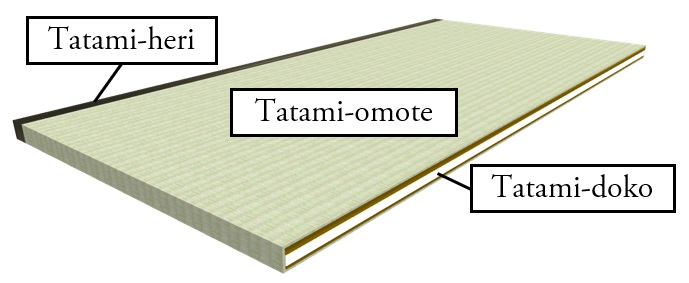
Tatami is structured with a thick core material called “Tatami-doko” and covered by a finished material called “Tatami-omote”.
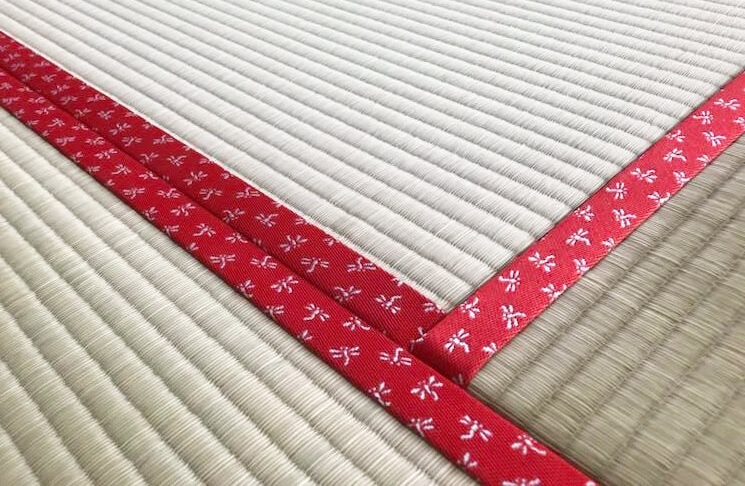
A cloth strip called “Tatami-heri” is sewn on both long edges of a Tatami mat.
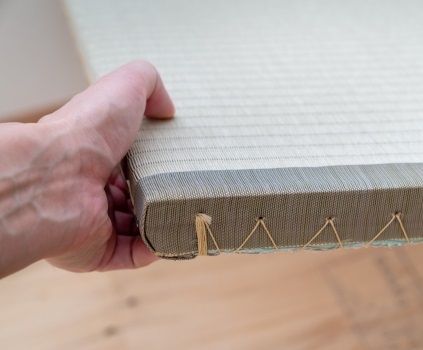
◇畳床(Tatami-doko)
The traditional Tatami-doko is made of layers of dried rice straw, compressed and sewn into a board shape. These days this type is considered a luxurious Tatami-doko.
Lightweight styrene foam, which prevents ticks and mold, has become popular and standard Tatami-doko in the current market.
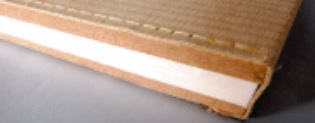
Standard Tatami-doko with polystyrene core
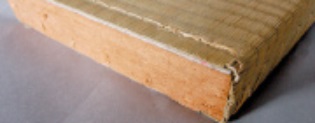
Sturdy Tatami-doko with all-board core
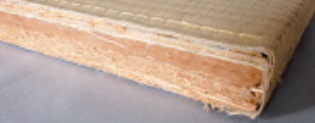
Traditional Tatami-doko with dried rice straw
◇畳表(Tatami-omote)
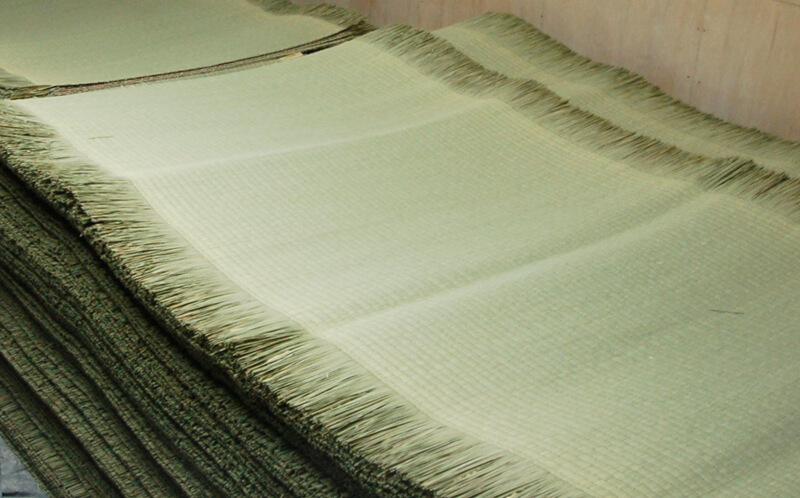
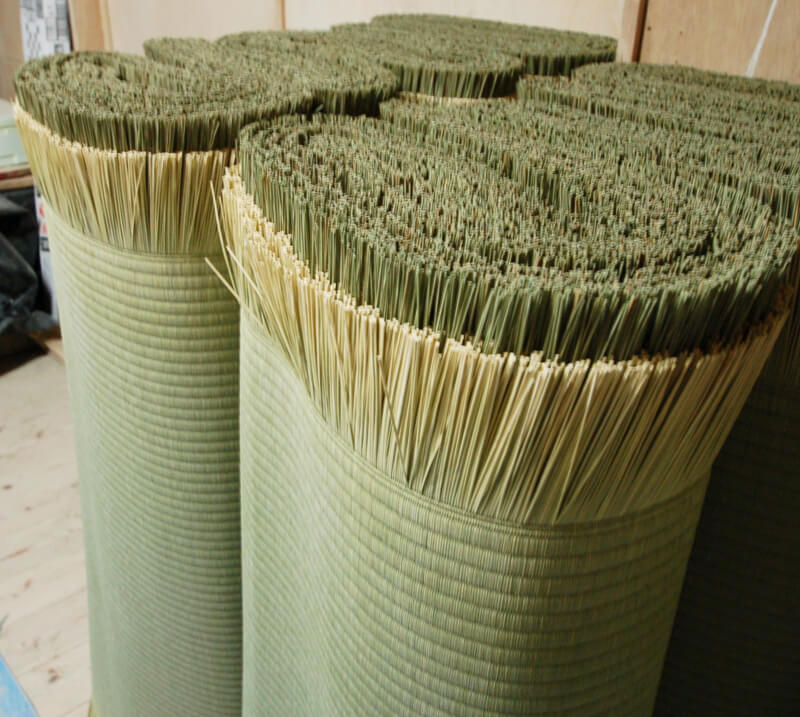
Tatami-omote is made from woven rush stems, called Igusa in Japanese, and hemp or cotton threads.
When the surface of Tatami-omote becomes damaged, it can be turned over and re-installed with the revised side.
◇畳縁(Tatami-heri)
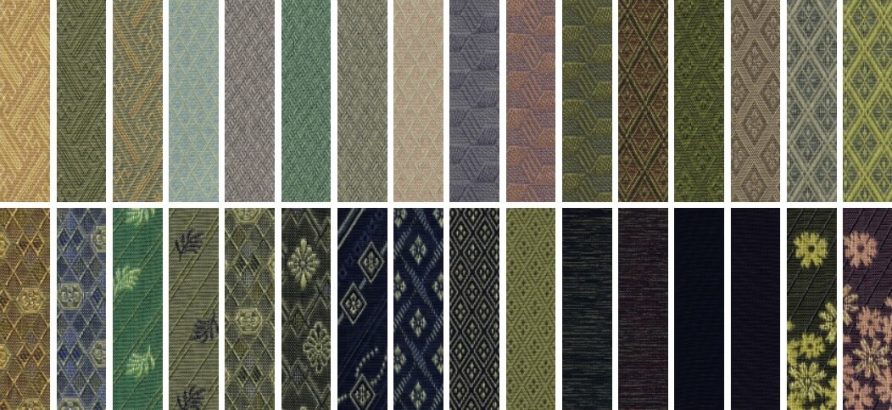
Tatami-heri is a narrow cloth strip sewn on both long edges of a Tatami mat, giving extra support and decoration.
Tatami-heri is available in various designs from simple to complex patterns, and many colors.
Type of Tatami
There are various types of Tatami for different purposes.
◇Nihon Tatami
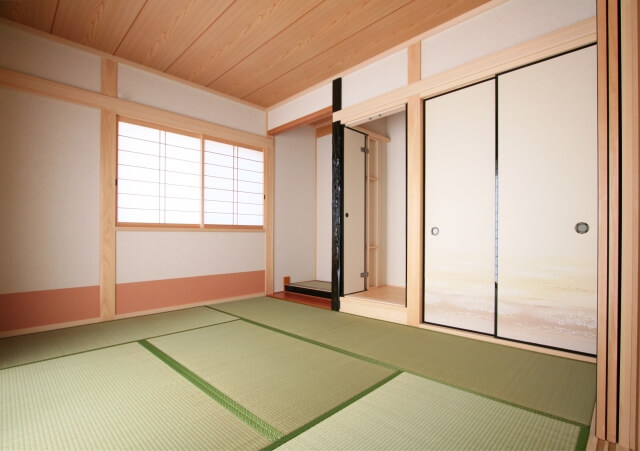
Traditionally popular Tatami with decorative Tatami-heri.
Typical tatami size is 1820mm (71.7inch) x 910mm (35.8inch) = approx. 1.66㎡. (17.8 sqft).
Tatami sizes used to differ by region, but in recent years, Tatami is customized to fit a room, and size varies.
◇Heri-nashi Tatami (Bozu Tatami)
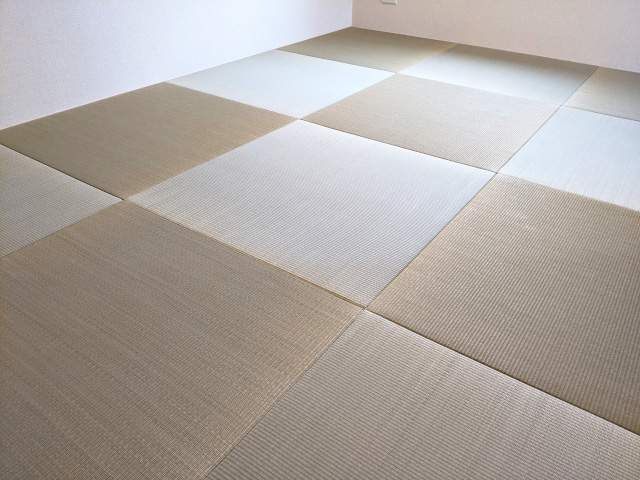
Square tatami without Tatami-heri. This type of Tatami has become popular in recent years.
By laying out with a “checkered pattern”, light and shadow create a beautiful space.
This type of Tatami is sometimes called “Ryukyu Tatami”.
◇Tokonoma Tatami
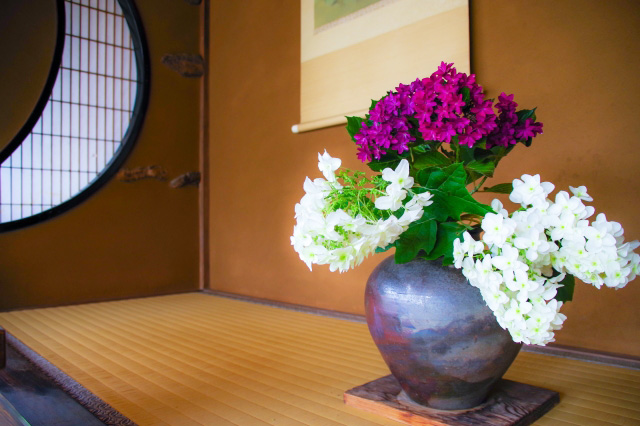
Tokonoma Tatami is a special tatami laid in Tokonoma, a recessed space in a Japanese-style reception room.
Tokonoma Tatami is not made to be sturdy as Tokonoma is a place where decorative objects are displayed.
A special Tatami-omote called “Ryubin” and a crest-patterned Tatami-heri called “Mon-beri” are used.
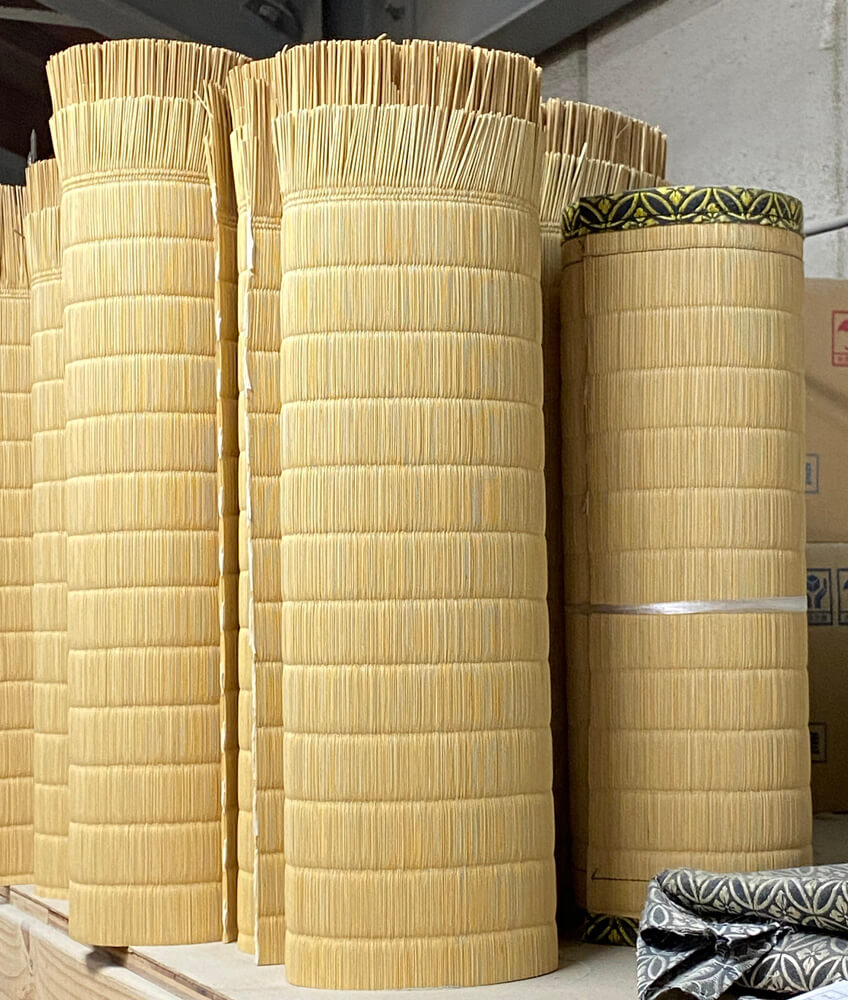
To make Ryubin, raw materials are exposed to the sun before being woven to make it yellowish. By placing Rybin on the Tokomoma floor, the Tokomoma space becomes brighter and display items stand out.
Igusa: The raw material of Tatami-omote
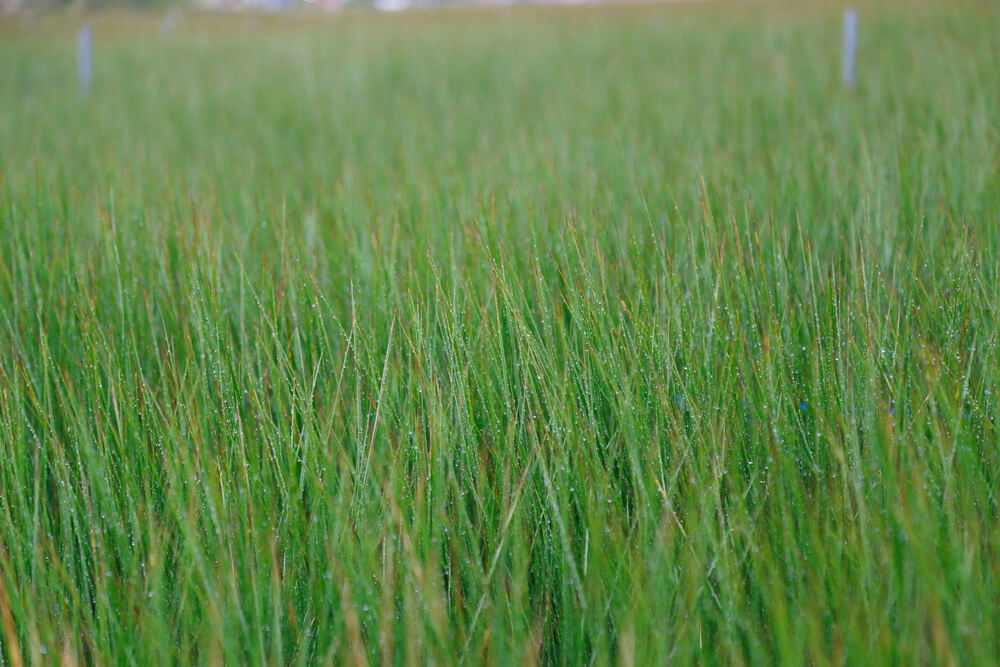
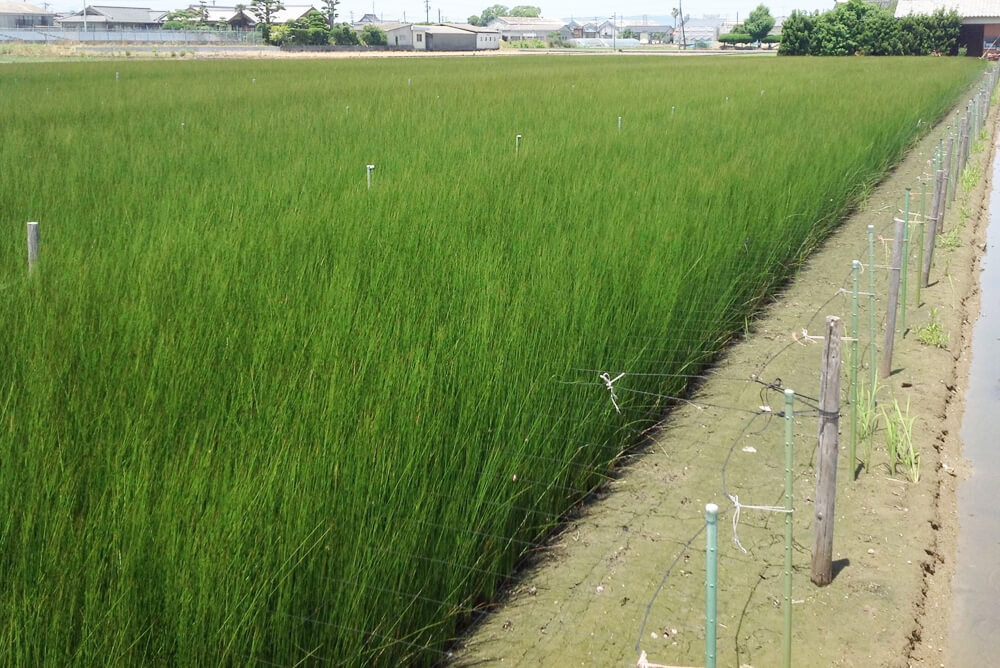
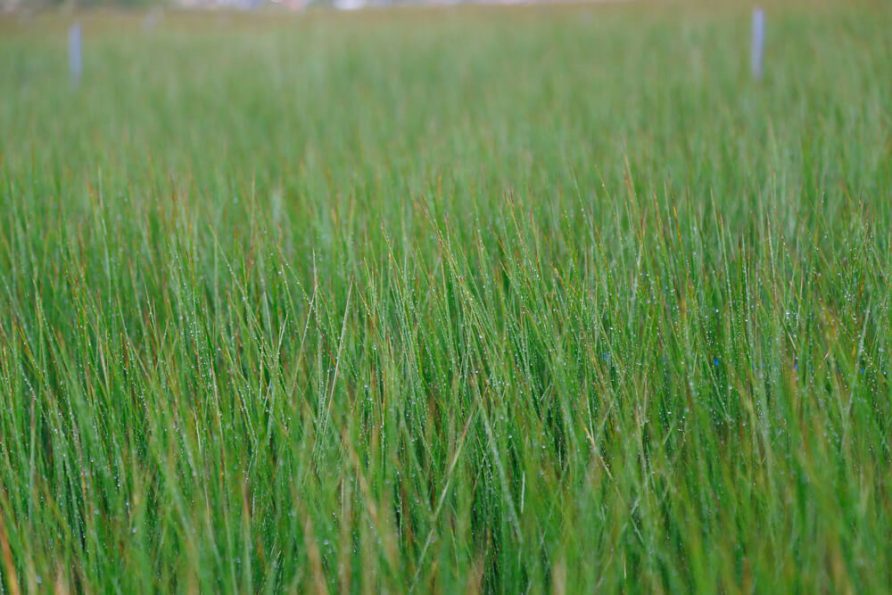
Traditionally, Tatami-omote has been made from Igusa, a monocotyledonous plant “rushes” in English.
Kumamoto Prefecture, located in western Japan, is famous for Igusa farming.
Igusa is harvested once a year, dried, and usually shipped out at least within three years.
Matured three to four-year-old Igusa is often preferred for the best Tatami-omote.
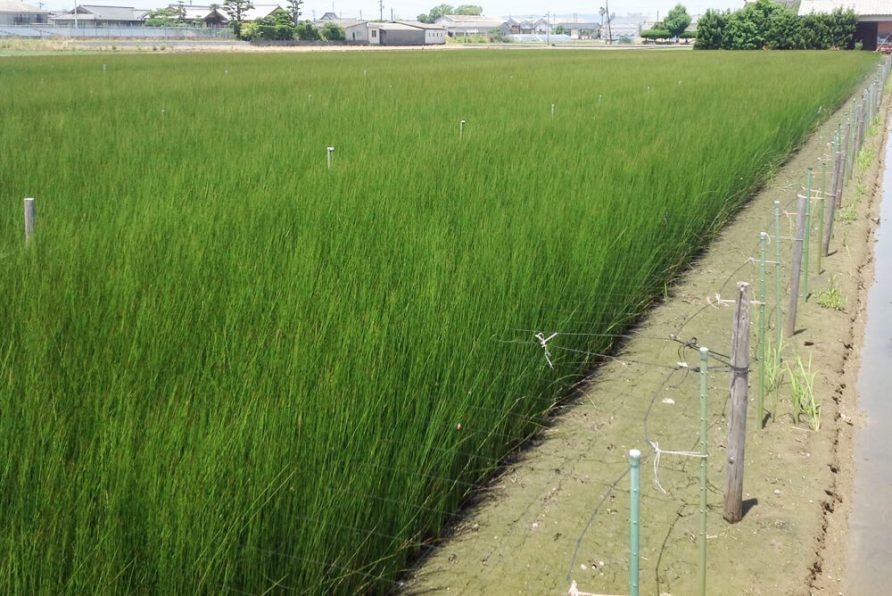
There are different types of Igusa, the most common type for Tatami use is called Marukusa, which is a round-shaped cross-section.
Its elegant and beautiful appearance.
There is also Shichitoi, which has a triangular cross-section and is simple in appearance and strong.
Taking advantage of this feature, it has been used for flooring for a store’s backroom and Judo stadiums since old times.
What is considered a high-grade Nihon Tatami?
High-graded Tatami mats are made from high-quality Japanese Igusa.
Igusa usually grows to over 1.5 m in length, but only the middle part of the grass is used to keep the best quality.
A heavier weight Tatami-omote with more Igusa volume is graded as a better Tatami.
The warp threads used to weave Tatami-omote are also important.
Two cotton threads are used for a standard Tatami mat but for a high-graded Tatami-omote woven with two to four hemp threads, which are stronger and do not stretch easily.
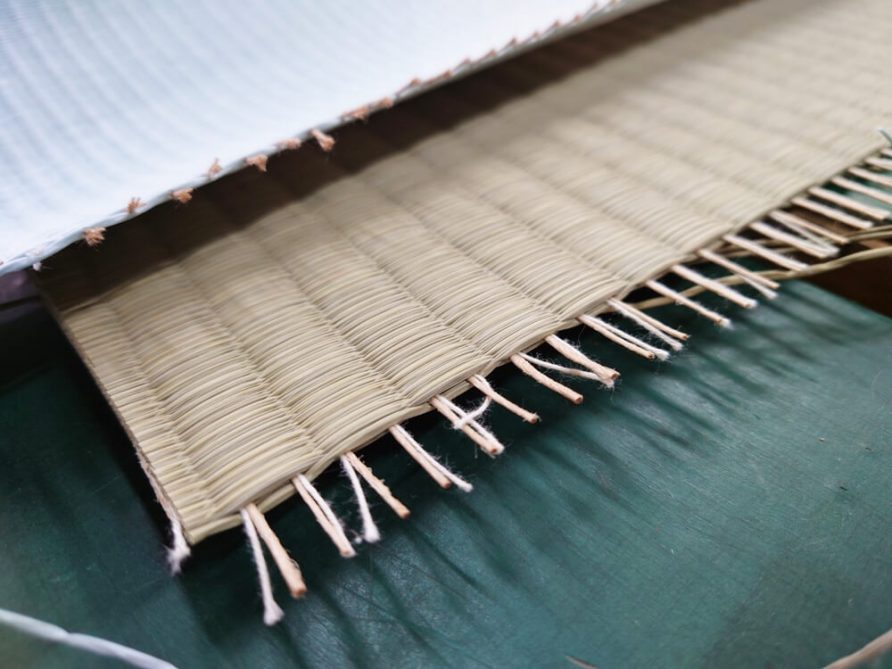
High-graded Tatami-omote woven with 4 warp threads (2 hemp threads + 2 cotton threads)
A good Tatami has a uniform color overall and is visually appealing even after being aged.
The quality of Japanese Tatami has remained by the skills of Tatami craftsmen.
Interview Cooperation
* * *

Tatami Master
MASUHIRO TSUKAMOTO
Tsukamoto Tatami Mat Shop